
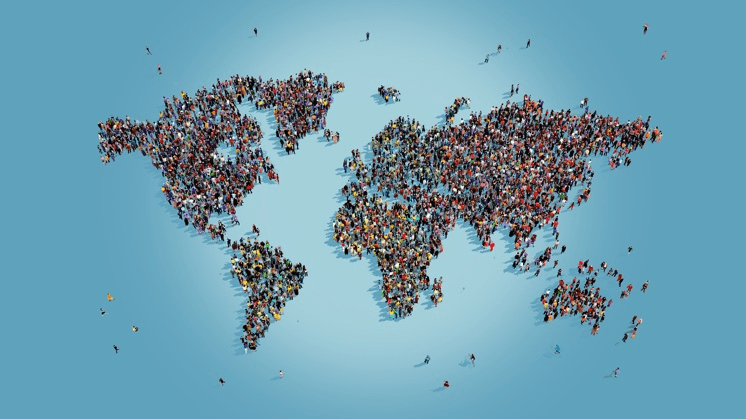
THE PLANET ´S INHABITANTS
Demography is the part of Human Geography that is responsible for studying the number of inhabitants, the composition of the population and its evolution.
POPULATION OF THE PLANET
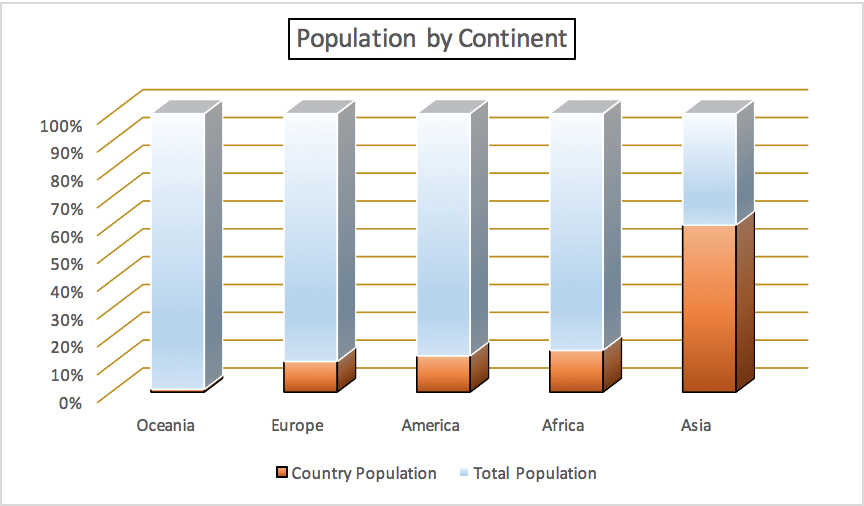
According to the United Nations, the population of the Earth exceeds 7,300 million inhabitants. And every year it increases by about 80 million.
FACTORS EXPLAINING THE POPULATION DISTRIBUTION
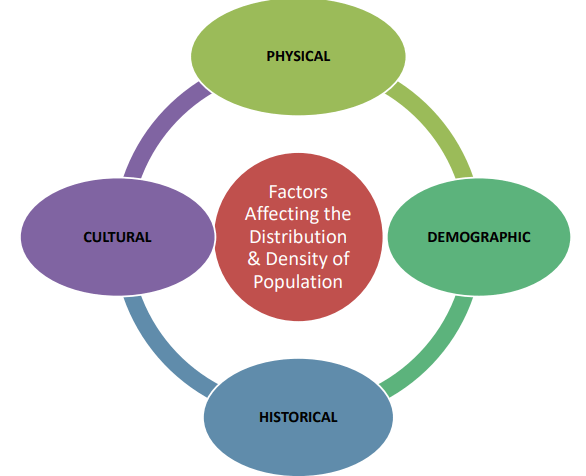
The population is not distributed equally on our planet and there are factors that explain this:
• Physical factors. The population is concentrated in temperate climates and in flat areas with good water supply. In extreme climates the population is much smaller.
• Historical factors. The most populated areas have been so since Antiquity, such as the areas of Mesopotamia and Egypt.
• Socioeconomic factors. In addition, the population settles in areas suitable for agriculture and with energy resources and thriving economic activity.
There are a range of human and natural factors that affect population density. The tables below illustrate this.
| Physical Factors | High Density | Low Density |
| Relief (shape and height of land) | Low land which is flat e.g. Ganges Valley in India | High land that is mountainous e.g. Himalayas |
| Resources | Areas rich in resources (e.g. coal, oil, wood, fishing etc.) tend to densely populated e.g. Western Europe | Areas with few resources tend to be sparsely populated e.g. The Sahel |
| Climate | Areas with temperate climates tend to be densely populated as there is enough rain and heat to grow crops e.g. UK | Areas with extreme climates of hot and cold tend to be sparsely populated e.g. the Sahara Desert |
| Human Factors | High Density | Low Density |
| Political | Countries with stable governments tend to have a high population density e.g. Singapore | Unstable countries tend to have lower population densities as people migrate e.g. Afghanistan. |
| Social | Groups of people want to live close to each other for security e.g. USA | Other groups of people prefer to be isolated e.g. Scandinavians |
| Economic | Good job opportunities encourage high population densities, particularly in large cities in MEDCs and LEDCs around the world. | Limited job opportunities cause some areas to be sparsely populated e.g. Amazon Rainforest |
UNEVEN DISTRIBUTION OF POPULATIONS
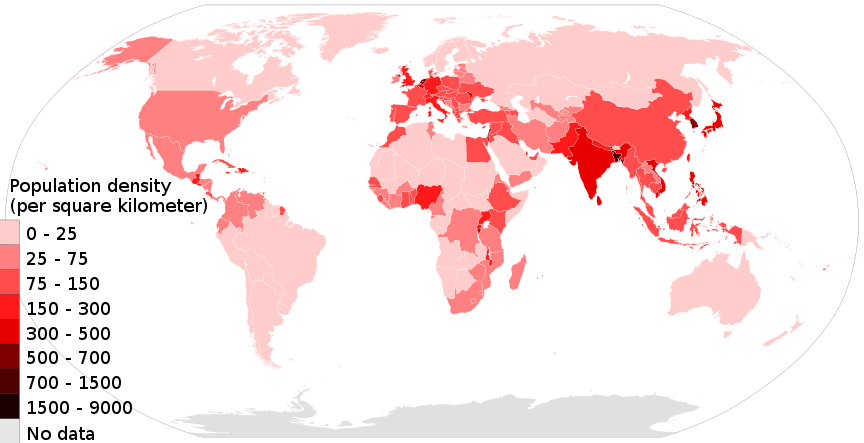
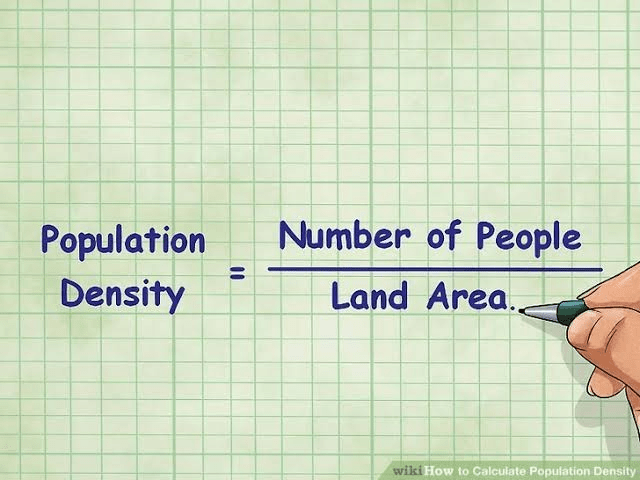
To know how the population is distributed in the territory, it is necessary to know the population density that relates the number of inhabitants with the extension of the territory.
We can talk about several areas according to population density:
• Densely populated areas with densities of more than 300 inhabitants per km2 such as China, India and Japan. However, there are small areas with high population densities such as Singapore or Monaco.
• Very sparsely populated areas with densities of less than 10 inhabitants per km2. They are in cold regions, equatorial forests and desert areas.
POPULATION DENSITY IN THE WORLD

Population density reflects the number of inhabitants of a territory for each square kilometer of its extension. Depending on the population density we distinguish territories:a
1. Very sparsely populated areas with a population density of less than 10 inhab/km2
2. Little populated areas between 10 and 50 inhabitants/km2
3. Medium populated between 50 and 100 inhabitants/km24. Highly populated with a density of more than 100 inhab/km2
FUTURE OF THE WORLD POPULATION
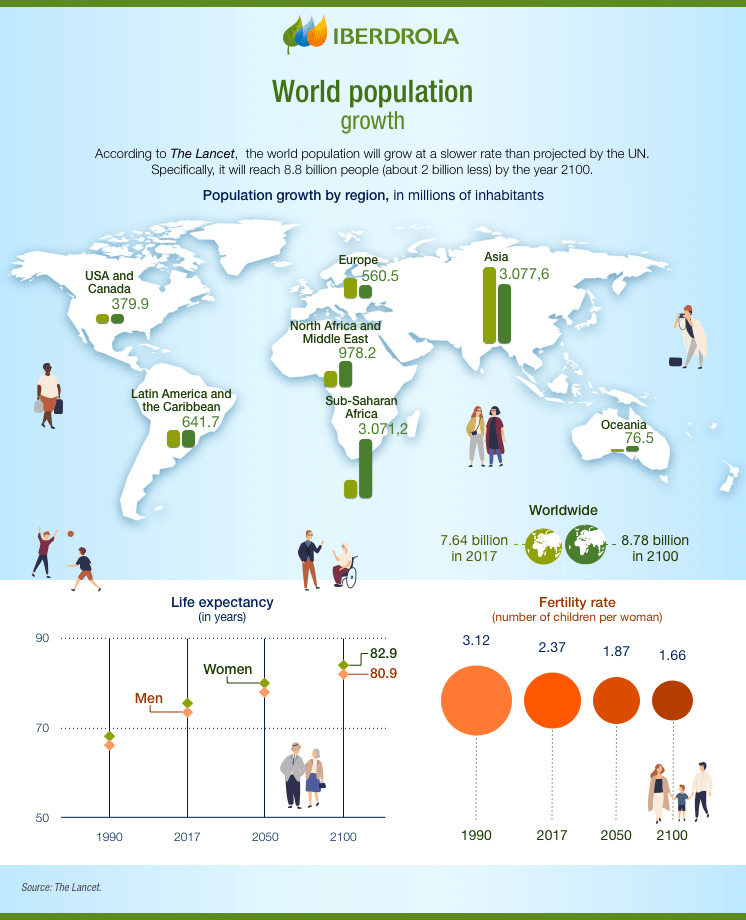
The UN projections on the evolution of the world population present great differences:
• China is the most populated country with 1.380 million inhabitants while India has 1.311 million inhabitants. India is believed to be the most populous country on Earth by 2025.
• Europe will lose population and have a low birth rate and an aging demographic.
• Nigeria is the most densely populated country in Africa with 182 million and will become the third most populous country in the world by 2050, surpassing the USA.
• Central and South America will experience slight growth, although it will decline by the end of the century.

POWERPOINT PRESENTATION:
NOTES READY TO STUDY:
WORKSHEETS:
1 Population and Settlement worksheets
VIDEOS TO REVIEW:
 2travellingacrosstime / Viajando a través del tiempo 2